
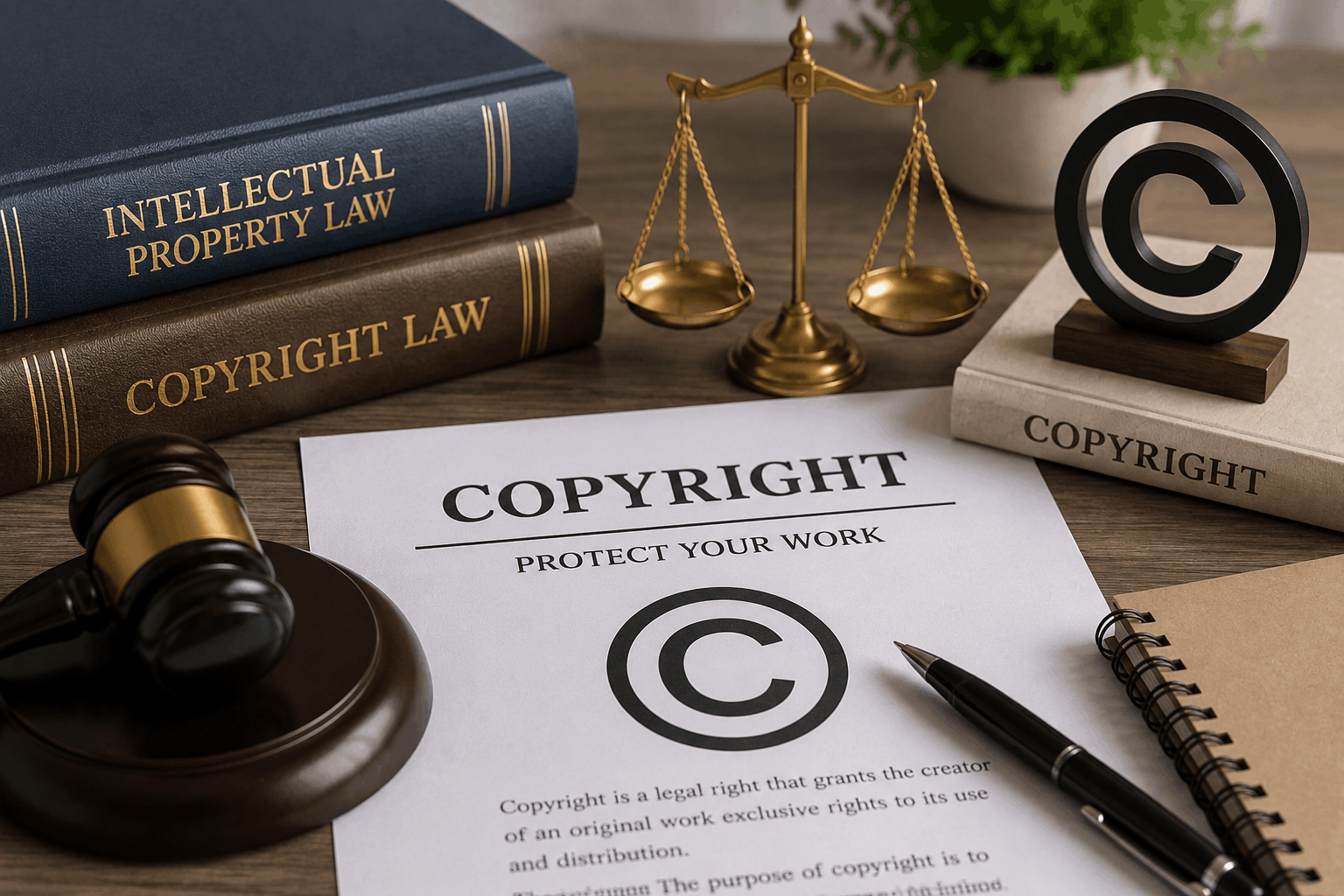
In today’s digital age, creativity is one of the most valuable assets for individuals and businesses alike. Authors, musicians, artists, filmmakers, photographers, software developers, content creators, and entrepreneurs invest significant time, effort, and resources into producing original works. Copyright law provides legal protection to these creators by granting them exclusive rights over their intellectual creations and preventing unauthorized use by others.
Copyright is a critical component of intellectual property law and plays a vital role in encouraging innovation, artistic expression, and economic growth. Understanding copyright protection is essential for creators, businesses, publishers, and anyone who uses creative content in their professional or personal activities.
## What is Copyright?
Copyright is a legal right granted to the creator of an original literary, artistic, musical, dramatic, or intellectual work. It provides the owner with exclusive rights to reproduce, distribute, publish, adapt, perform, display, or license the work.
Copyright protection arises automatically when an original work is created and fixed in a tangible form. Registration is not mandatory for obtaining copyright protection, but registration can serve as valuable evidence of ownership in legal disputes.
The primary objective of copyright law is to balance the interests of creators with public access to knowledge and creativity.
## Copyright Law in India
Copyright protection in India is governed by the Copyright Act, 1957, along with subsequent amendments that address technological advancements and digital content.
The law provides protection for a wide range of original works and establishes the rights, obligations, remedies, and enforcement mechanisms available to copyright owners.
The Act aims to:
* Protect creators’ rights.
* Encourage innovation and creativity.
* Prevent unauthorized copying and distribution.
* Facilitate licensing and commercialization.
* Promote cultural and economic development.
## Works Protected Under Copyright
Copyright law protects various categories of original works.
### Literary Works
These include:
* Books
* Articles
* Blogs
* Research papers
* Computer programs
* Databases
* Website content
### Artistic Works
Examples include:
* Paintings
* Drawings
* Illustrations
* Sculptures
* Maps
* Architectural designs
* Graphic designs
### Musical Works
Musical compositions, arrangements, and written music are protected under copyright law.
### Dramatic Works
These include:
* Scripts
* Screenplays
* Stage performances
* Choreographic works
### Cinematographic Films
Movies, documentaries, videos, and audiovisual productions are protected as cinematographic works.
### Sound Recordings
Audio recordings, songs, podcasts, and other recorded sounds receive copyright protection.
## Rights of a Copyright Owner
Copyright owners enjoy several exclusive legal rights.
### Right of Reproduction
The owner has the exclusive right to make copies of the work.
### Right of Distribution
The owner controls how copies of the work are distributed to the public.
### Right of Communication to the Public
Copyright holders can authorize public performances, broadcasts, or online communication.
### Right of Adaptation
The owner can create derivative works based on the original content.
### Right of Translation
The owner controls translations of the work into other languages.
### Right to License
Copyright owners may license their rights to third parties for commercial purposes.
These rights enable creators to monetize and protect their creative efforts.
## Copyright Registration in India
Although copyright exists automatically upon creation, registration provides significant legal advantages.
### Benefits of Copyright Registration
* Evidence of ownership.
* Public record of rights.
* Easier enforcement in legal disputes.
* Greater credibility in licensing transactions.
* Enhanced protection against infringement.
Registration is commonly sought by authors, businesses, software developers, content creators, and media companies.
## Duration of Copyright Protection
Copyright protection generally lasts for a substantial period.
For literary, dramatic, musical, and artistic works, protection typically continues for the lifetime of the author plus a specified period after death.
For films, sound recordings, and certain other works, protection is available for a prescribed statutory period from publication.
The duration ensures that creators and their heirs can benefit economically from creative works.
## Copyright Infringement
Copyright infringement occurs when a protected work is used without authorization from the copyright owner.
Common examples include:
* Unauthorized copying.
* Illegal downloads.
* Content piracy.
* Unlicensed software use.
* Reproducing photographs without permission.
* Publishing copyrighted material without authorization.
* Unauthorized distribution of movies and music.
Infringement can occur both online and offline.
## Digital Copyright Challenges
The internet has created new opportunities for content distribution but has also increased copyright violations.
Common digital copyright issues include:
* Website content theft.
* Social media content copying.
* Video piracy.
* Unauthorized streaming.
* Software piracy.
* Online image misuse.
* Digital content duplication.
Creators must actively monitor and protect their intellectual property in digital environments.
## Fair Dealing and Copyright Exceptions
Copyright law recognizes certain exceptions that permit limited use of copyrighted material without permission.
Examples may include:
* Research and private study.
* Criticism and review.
* Reporting of current events.
* Educational purposes.
* Judicial proceedings.
These exceptions help balance public interest with creators’ rights.
However, users should exercise caution because unauthorized use beyond permissible limits may constitute infringement.
## Legal Remedies for Copyright Infringement
Copyright owners have several remedies available when their rights are violated.
### Injunctions
Courts may issue orders preventing further unauthorized use.
### Damages
Financial compensation may be awarded for losses resulting from infringement.
### Account of Profits
Infringers may be required to surrender profits earned through unauthorized use.
### Seizure of Infringing Materials
Courts may order confiscation of unauthorized copies.
### Criminal Penalties
Certain copyright violations may attract criminal prosecution, fines, and imprisonment.
Strong enforcement mechanisms help deter infringement and protect creative industries.
## Importance of Copyright for Businesses
Businesses increasingly rely on intellectual property assets for growth and competitiveness.
Copyright protects:
* Marketing materials.
* Websites.
* Software applications.
* Product manuals.
* Training content.
* Brand-related creative works.
* Digital media assets.
Protecting copyrighted materials helps businesses preserve competitive advantages and revenue streams.
## Copyright and Social Media
Social media platforms have transformed content sharing but also increased copyright risks.
Users should avoid:
* Uploading copyrighted content without permission.
* Using copyrighted music in commercial projects without licenses.
* Copying images from websites without authorization.
* Republishing articles without proper rights.
Content creators should understand platform policies and copyright regulations before sharing materials online.
## How to Protect Your Copyright
Creators can take several proactive measures to safeguard their work.
### Maintain Records
Keep drafts, source files, contracts, and creation dates as evidence of authorship.
### Register Copyright
Formal registration strengthens legal protection.
### Use Copyright Notices
Clearly indicate ownership through copyright notices.
### Monitor Unauthorized Use
Regularly check online platforms for potential infringement.
### Execute Licensing Agreements
Written agreements help define usage rights and prevent disputes.
### Seek Legal Assistance
Intellectual property professionals can assist with registration, enforcement, and dispute resolution.
## Role of Copyright Lawyers
Copyright lawyers help individuals and businesses navigate intellectual property matters.
Their services may include:
* Copyright registration.
* Licensing agreements.
* Infringement litigation.
* Enforcement actions.
* Contract drafting.
* Intellectual property audits.
* Digital copyright protection.
Professional legal guidance is often essential when valuable intellectual property assets are involved.
## Conclusion
Copyright law serves as a cornerstone of intellectual property protection by safeguarding original creative works and rewarding innovation. In an increasingly digital world, creators and businesses must understand their rights and take proactive steps to protect valuable intellectual property assets.
Whether you are an author, artist, musician, filmmaker, software developer, entrepreneur, or content creator, copyright protection can help secure ownership, generate revenue opportunities, and prevent unauthorized use of your work. By understanding copyright laws, registering important works, and seeking professional guidance when needed, creators can effectively protect their creative contributions and maximize the value of their intellectual property.