

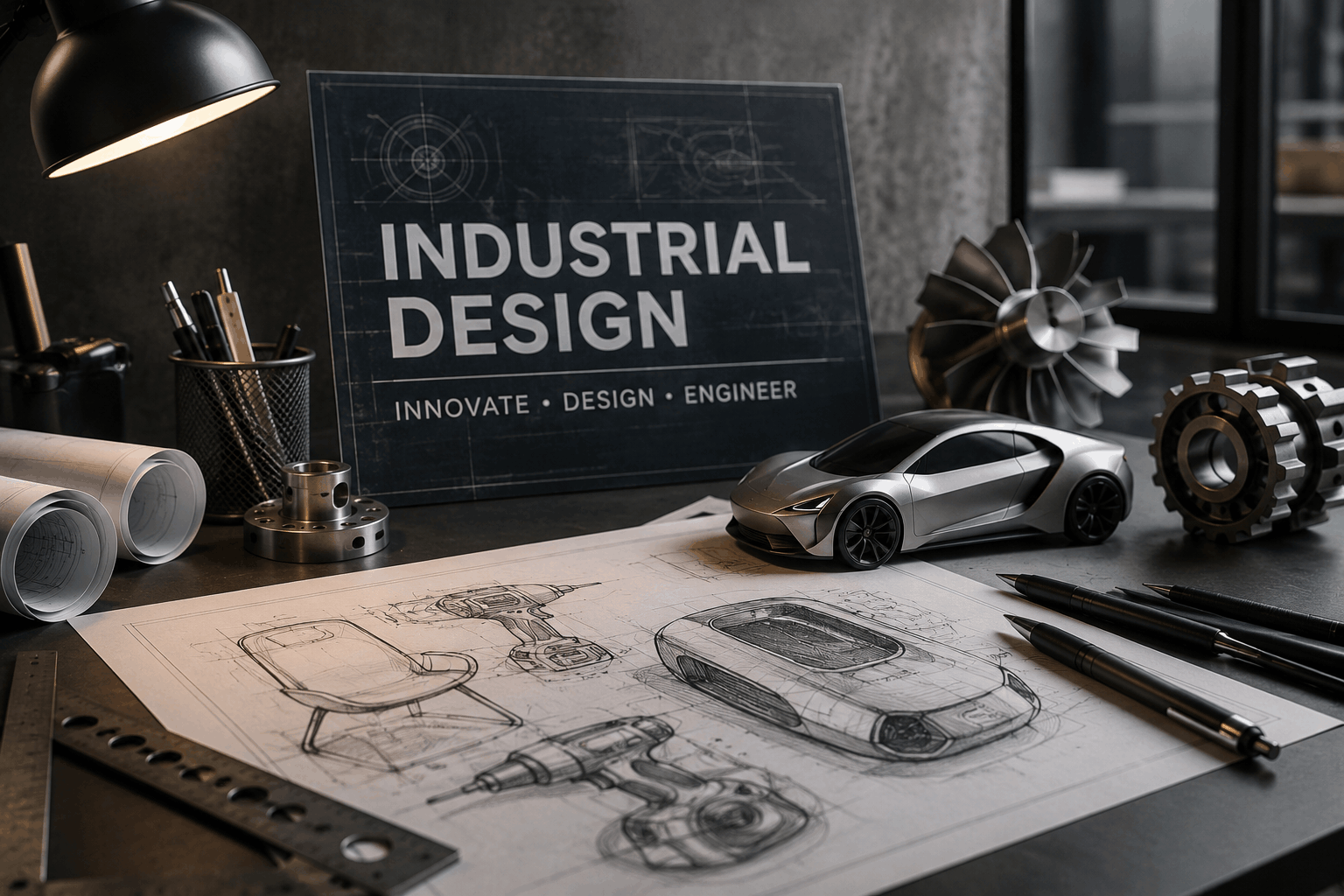
Industrial design plays a vital role in enhancing the visual appeal and commercial value of products. In today’s competitive marketplace, consumers are often attracted to products with unique shapes, patterns, configurations, and ornamental features. Protecting these distinctive visual elements is essential for businesses, manufacturers, startups, designers, and innovators. In India, industrial designs are protected under the **Designs Act, 2000** and the **Designs Rules, 2001**, providing creators with exclusive rights over the appearance of their products.
Industrial Design Registration helps prevent unauthorized copying, imitation, or commercial exploitation of a registered design. It also strengthens brand identity, enhances market competitiveness, and adds value to intellectual property portfolios. Whether you are launching a consumer product, furniture, packaging, electronics, medical device, automotive component, or fashion accessory, securing design protection can be a strategic business advantage.
## What is an Industrial Design?
An industrial design refers to the aesthetic or ornamental features of a product. It protects the visual appearance rather than the functional or technical aspects of the product. A registered design may include:
* Shape
* Configuration
* Pattern
* Ornamentation
* Composition of lines
* Composition of colors
* Surface decoration
* Visual appearance of a manufactured article
Industrial design protection applies only to the external appearance of an article and not to its working mechanism or functionality.
## Importance of Industrial Design Registration
Registering an industrial design offers several legal and commercial benefits, including:
* Exclusive rights to use the registered design.
* Protection against unauthorized copying or imitation.
* Enhanced brand recognition.
* Increased commercial value of products.
* Competitive advantage in the marketplace.
* Licensing and royalty opportunities.
* Stronger intellectual property portfolio.
* Legal remedies against infringement.
A registered design can become a valuable business asset and contribute significantly to product differentiation.
## Who Can Apply for Industrial Design Registration?
The following entities may apply for design registration:
* Individual designers.
* Product manufacturers.
* Entrepreneurs.
* Startups.
* Companies.
* Partnership firms.
* Limited Liability Partnerships (LLPs).
* Design studios.
* Assignees or legal representatives of the creator.
Both Indian and eligible foreign applicants can seek protection, subject to applicable laws and international arrangements.
## What Can Be Registered?
Industrial design protection is available for a wide range of products, such as:
* Consumer electronics.
* Furniture.
* Kitchen appliances.
* Medical equipment.
* Mobile accessories.
* Packaging designs.
* Lighting products.
* Toys.
* Home décor items.
* Jewellery.
* Footwear.
* Fashion accessories.
* Automotive components.
* Industrial tools.
* Bottles and containers.
The design must be capable of being applied to an article by an industrial process.
## Eligibility Criteria
To qualify for registration, a design should generally be:
* New or original.
* Not previously published in India or elsewhere.
* Distinctive in appearance.
* Capable of industrial application.
* Primarily aesthetic rather than functional.
* Not contrary to public order or morality.
Designs lacking novelty or consisting solely of functional features are generally not registrable.
## Documents Required
Applicants may typically need:
* Applicant details.
* Representation or drawings of the design.
* Product description.
* Class of the article.
* Power of Attorney, where applicable.
* Assignment document, if the applicant is not the original creator.
* Other supporting documents as required by the authorities.
Accurate documentation helps ensure a smoother registration process.
## Registration Process
The industrial design registration process generally involves the following steps:
### 1. Design Search
A preliminary search helps determine whether a similar design has already been registered or published.
### 2. Preparation of Application
The application includes representations of the design and details of the article to which it will be applied.
### 3. Filing the Application
The application is filed with the appropriate authority along with the prescribed fees and documents.
### 4. Examination
The design is examined to verify compliance with legal requirements, including novelty and registrability.
### 5. Response to Examination
If objections are raised, the applicant may submit clarifications or amendments.
### 6. Registration and Publication
Once approved, the design is registered and entered into the official register, granting statutory protection.
## Rights of the Registered Owner
Upon successful registration, the owner generally obtains the exclusive right to:
* Use the registered design.
* Manufacture products incorporating the design.
* Sell and market products featuring the design.
* License or assign the design rights.
* Initiate legal proceedings against infringement.
* Claim damages or other remedies where appropriate.
These rights help safeguard the commercial value of innovative product designs.
## Infringement of Industrial Design
Industrial design infringement occurs when a registered design is copied, imitated, or applied to products without authorization.
Examples include:
* Manufacturing products with a substantially similar appearance.
* Selling counterfeit products using the protected design.
* Importing infringing goods.
* Offering infringing products for sale.
* Commercial exploitation of a registered design without permission.
Timely legal action can help stop infringement and protect business interests.
## Legal Remedies
The registered proprietor may seek legal remedies such as:
* Injunctions to restrain further infringement.
* Compensation or damages, where applicable.
* Delivery or destruction of infringing products, subject to court orders.
* Recovery of legal costs in appropriate cases.
The specific remedies depend on the facts of the case and applicable law.
## Benefits for Businesses
Industrial design registration provides several commercial advantages:
* Enhances product branding.
* Builds consumer confidence.
* Increases product marketability.
* Attracts investors and business partners.
* Creates licensing and franchising opportunities.
* Adds value during mergers and acquisitions.
* Supports export competitiveness.
* Strengthens overall intellectual property strategy.
Businesses that invest in design protection are often better positioned to compete in innovation-driven markets.
## Industrial Design vs Patent
Although both forms of intellectual property protection encourage innovation, they serve different purposes:
* **Industrial Design** protects the visual appearance of a product.
* **Patent** protects new inventions, technical solutions, or functional innovations.
A single product may qualify for both patent and design protection if it satisfies the respective legal requirements.
## Importance of Professional Assistance
Professional intellectual property services can assist with:
* Design searches.
* Registration strategy.
* Application drafting.
* Documentation.
* Examination responses.
* Renewal guidance.
* Licensing agreements.
* Infringement analysis.
* Enforcement and litigation support.
Expert guidance helps applicants navigate the registration process efficiently while maximizing the scope of legal protection.
## Conclusion
Industrial Design Registration is an essential intellectual property tool for protecting the unique appearance of products and strengthening a business’s competitive position. By securing exclusive rights over innovative designs, creators can prevent unauthorized copying, enhance brand value, and unlock commercial opportunities through licensing and market expansion. Whether you are a startup, designer, manufacturer, or established enterprise, investing in industrial design protection is a strategic step toward long-term business growth and innovation.