

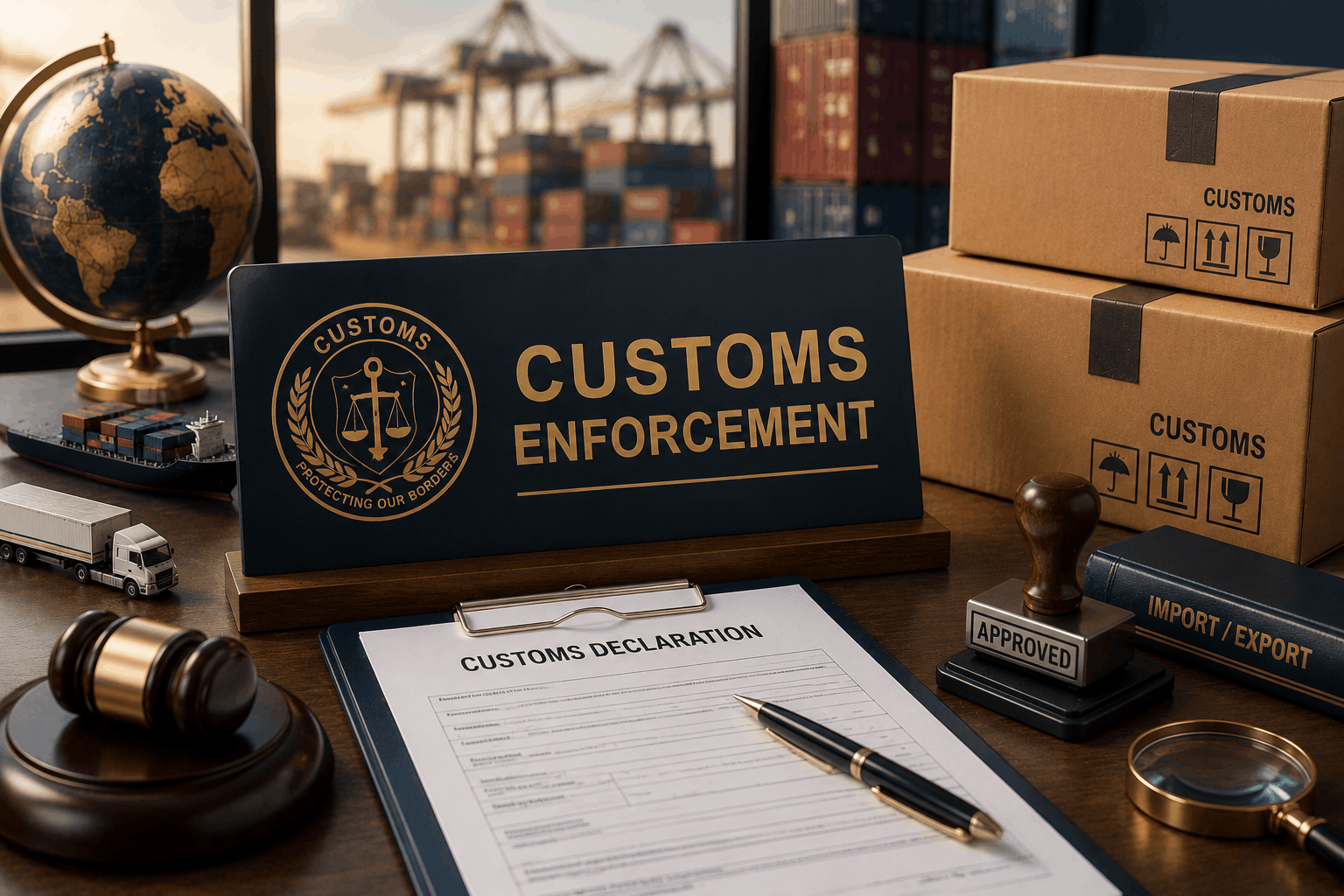
Customs Enforcement plays a vital role in regulating the import and export of goods, safeguarding national security, preventing smuggling, and ensuring compliance with customs laws. In India, customs authorities are empowered to monitor cross-border trade, collect customs duties, investigate violations, and take legal action against individuals or businesses involved in illegal import or export activities. With the rapid growth of international trade and e-commerce, businesses must understand customs regulations to avoid penalties, delays, and legal disputes.
Customs enforcement is governed primarily by the **Customs Act, 1962**, along with various rules, notifications, and regulations issued by the Central Board of Indirect Taxes and Customs (CBIC). Whether you are an importer, exporter, logistics company, customs broker, manufacturer, or multinational corporation, complying with customs laws is essential for smooth business operations and international trade.
## What is Customs Enforcement?
Customs Enforcement refers to the legal and regulatory measures adopted by customs authorities to ensure compliance with import and export laws. It involves monitoring goods entering or leaving the country, collecting customs duties, preventing illegal trade, detecting customs fraud, and investigating violations of customs regulations.
The primary objectives of customs enforcement include:
* Preventing smuggling
* Ensuring payment of customs duties
* Protecting national security
* Regulating international trade
* Preventing illegal import and export
* Protecting intellectual property rights
* Preventing money laundering through trade
* Ensuring compliance with trade regulations
Strong customs enforcement helps maintain fair trade practices while protecting the country’s economic interests.
## Legal Framework Governing Customs Enforcement
Customs enforcement in India operates under several important laws and regulations, including:
* Customs Act, 1962
* Customs Tariff Act, 1975
* Foreign Trade (Development and Regulation) Act, 1992
* Goods and Services Tax (GST) provisions relating to imports
* Foreign Exchange Management Act (FEMA), where applicable
* Prevention of Money Laundering Act (PMLA), in relevant cases
* Intellectual Property Rights (Imported Goods) Enforcement Rules
* Notifications and Circulars issued by CBIC
These laws regulate import duties, export procedures, prohibited goods, investigations, confiscation, adjudication, and penalties.
## Common Customs Enforcement Matters
Businesses and individuals may face customs enforcement proceedings in various situations, such as:
* Misdeclaration of imported goods
* Undervaluation or overvaluation of goods
* Incorrect classification under HSN codes
* Evasion of customs duty
* Smuggling allegations
* Import of prohibited or restricted goods
* Illegal export of controlled items
* Fake invoices or documentation
* Non-compliance with import licenses
* Violation of export control regulations
* Intellectual property infringement
* Customs valuation disputes
Each case requires careful legal analysis and appropriate representation before customs authorities.
## Powers of Customs Authorities
Customs officers have significant statutory powers to enforce customs laws, including:
* Inspection of imported and exported goods
* Search of premises, containers, and vehicles
* Seizure of goods and documents
* Summoning individuals for inquiry
* Recording statements
* Confiscation of goods
* Levying customs duty and penalties
* Arrest in specified cases
* Launching prosecution before competent courts
These powers are exercised in accordance with the Customs Act and applicable procedural safeguards.
## Investigation Process
Customs investigations generally follow a structured process:
### Risk Assessment
Authorities identify suspicious transactions through intelligence, documentation review, and risk management systems.
### Inspection and Verification
Imported or exported goods are physically examined, and supporting documents are scrutinized.
### Search and Seizure
Where necessary, customs officers may conduct searches and seize goods, records, or electronic evidence.
### Show Cause Notice
A notice is issued detailing the alleged violations and providing an opportunity to respond.
### Adjudication Proceedings
The concerned authority examines evidence, hears both parties, and passes an adjudication order.
### Appeal
Aggrieved parties may challenge adverse orders before the appropriate appellate authority or tribunal as permitted by law.
## Penalties for Customs Violations
Failure to comply with customs laws may result in serious consequences, including:
* Recovery of unpaid customs duty
* Monetary penalties
* Confiscation of goods
* Seizure of conveyances
* Suspension or cancellation of import-export privileges
* Interest on delayed payments
* Criminal prosecution in serious cases
* Arrest under specified circumstances
* Blacklisting of importers or exporters
* Reputational damage
The nature and severity of penalties depend on the facts, applicable law, and the gravity of the violation.
## Documents Commonly Required
Proper documentation is critical in customs proceedings. Common documents include:
* Bill of Entry
* Shipping Bill
* Commercial Invoice
* Packing List
* Bill of Lading or Airway Bill
* Import Export Code (IEC)
* Certificate of Origin
* Import licenses, where applicable
* Customs duty payment records
* Purchase orders
* Insurance documents
* Freight documents
* Technical specifications of goods
* Correspondence with customs authorities
Maintaining accurate records helps businesses respond effectively during audits and investigations.
## Importance of Legal Representation
Customs disputes often involve complex legal and technical issues relating to valuation, classification, exemptions, licensing, and procedural compliance. Experienced legal professionals assist clients by:
* Advising on customs compliance
* Responding to show cause notices
* Representing clients during investigations
* Assisting in search and seizure matters
* Preparing legal submissions
* Representing before adjudicating authorities
* Filing appeals before appellate forums
* Handling prosecution matters where required
* Advising on customs duty disputes
* Protecting business interests during enforcement actions
Timely legal advice can significantly reduce the risk of adverse consequences.
## Best Practices for Customs Compliance
Businesses involved in international trade should adopt strong compliance measures, including:
* Maintain complete and accurate documentation.
* Correctly classify imported and exported goods.
* Ensure proper customs valuation.
* Verify applicable exemptions and notifications.
* Conduct periodic compliance reviews.
* Train employees on customs procedures.
* Maintain transparent accounting records.
* Work with qualified customs professionals.
* Respond promptly to notices from authorities.
* Seek legal advice before high-value or complex transactions.
A proactive compliance program minimizes legal risks and facilitates smooth cross-border operations.
## Why Choose Professional Customs Law Experts?
Experienced customs law professionals understand the complexities of import-export regulations, customs procedures, valuation rules, tariff classifications, and enforcement mechanisms. They provide strategic legal guidance, compliance support, representation during investigations, and effective advocacy before customs authorities and appellate forums.
Whether you are facing a customs investigation, a valuation dispute, allegations of duty evasion, confiscation proceedings, or regulatory compliance issues, professional legal assistance helps safeguard your rights and business interests.
## Conclusion
Customs Enforcement is a crucial aspect of international trade regulation that ensures lawful import and export activities while protecting national revenue and security. Businesses engaged in global commerce must understand their legal obligations under customs laws and maintain robust compliance practices.
Professional legal guidance in customs matters helps organizations navigate complex regulations, respond effectively to enforcement actions, resolve disputes efficiently, and maintain uninterrupted international trade operations. By ensuring compliance with customs laws, businesses can reduce legal risks, avoid costly penalties, and build a strong foundation for sustainable global growth.